Classification
Contact Us
We have a professional after-sales team, always focuses on customer needs, and provides a full range of efficient services. It is easy to solve the problem for manufacturing company.
Contact Us Now!News Center

The uncooled Dual-FOV infrared thermal imager is a mature and highly reliable product independently developed by our company that complies with ISO standards. It uses high-quality materials and advanced manufacturing technology.The dual field thermal imaging instrument has strong adaptability to harsh environments and can achieve both long-distance detection and detail recognition, greatly improving detection accuracy.
Details Parameters
Advanced technologies for the highest performance long-wave focal planes:
1.High-durability and hard-carbon 8-14 µm LWIR wavelength DLC exposed mirror coating.
2.High precision manufacturing processes and strict quality control procedures ensure stable imaging in various practical use environments.
3.Optimized for 1024x768 LWIR cameras with 12 μm pixel pitch.
4.Dual field of view design to meet various application requirements.
| Specifications | ||
| OPTICAL | ||
| Focal Length / F# | 25mm/70mm F0.95/1.1 | Compatible with detectors having 25mm&70mm |
| Detector (FPA) type | 1024×768-12μm | |
| Working Spectral Band(SR) | 8um-14um | |
| FOV | 27.61°×20.89°/10.03°×7.53° | |
| Exposed Mirror Coating | DLC | AR and HD are available upon request |
| Imaging Range | 5m to infinity | |
| MECHANICAL | ||
| Zoom Mechanism | Motorized | |
| Total Weight | ≤830g | lens and control pannel |
| Dimensions | φ80mm×103.6mm | Length is available upon request |
| Mount | Customized to Specification | |
| ENVIRONMENTAL | ||
| Operating Temperature | -40ºC to +60ºC | |
| Storage Temperature | -40ºC to +60ºC | Keep two houres when test |
| Shock and Vibrations | Per applicable standard | |
| Front Lens Sealing | IP67 | |
Features
Detection, Recognition & Identification (DRI) Range
DRI ranges enable one to easily estimate the maximum range that an object can be either detected, recognized or identified. It is important to note that these estimates are based solely on geometrical parameters – the target size, distance, lens focal length and camera detector pixel size. Signal level, detector sensitivity, atmospheric conditions and other factors are not considered!
Detection: An object is present – Car1.88km/5.25km&Person0.42km/1.17km.
Recognition: discern the type of object – Car0.63km/1.75km&Person0.14km/0.39km.
Identification: discern specific objects –Car0.31km/0.88km&Person0.07km/0.19km.
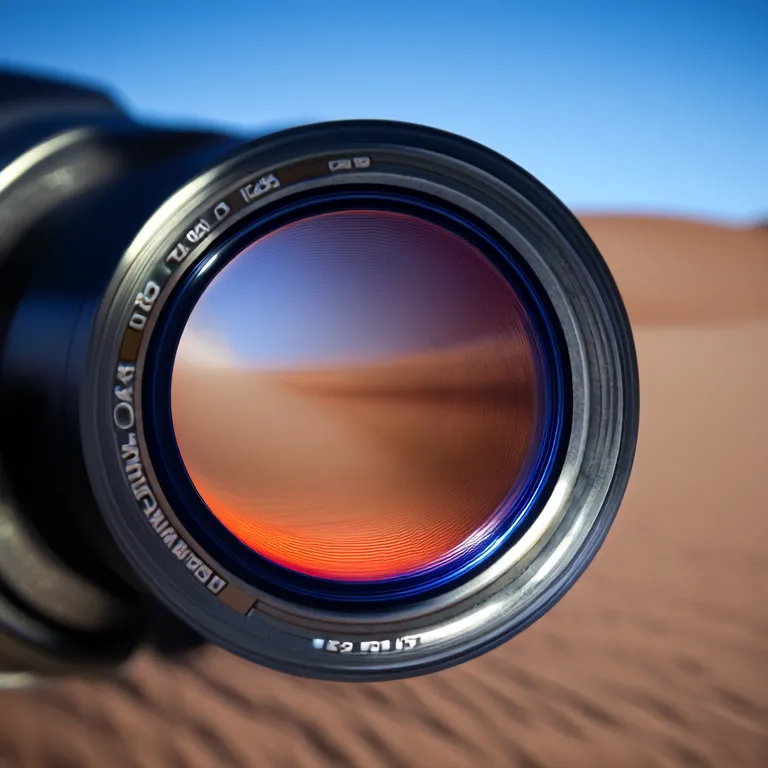
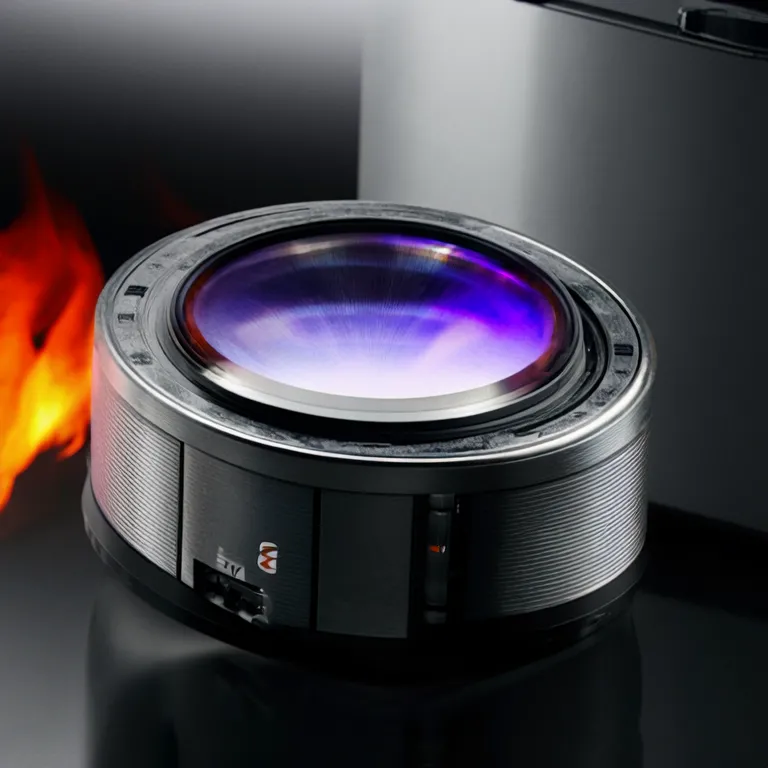
The 25/70mm uncooled LWIR dual FOV lens is designed for thermal imaging systems that require both wide-area detection and narrow-field observation in one motorized optical assembly. With 25mm and 70mm focal lengths, F0.95/F1.1 apertures and compatibility with 1024×768 detectors with a 12μm pixel pitch, this lens provides flexible imaging for security monitoring, industrial surveillance, firefighting and other long-wave infrared applications.
The 25mm focal length provides a wider field of view for area coverage and situational awareness, while the 70mm focal length offers a narrower view for observing distant targets and recognizing important details. Its dual-FOV design helps reduce the need for separate wide-angle and telephoto thermal cameras.
For related models and focal-length combinations, view our LWIR uncooled dual-FOV lens range. For project-specific optical and mechanical requirements, visit our custom infrared lens solution page.
Dual focal lengths: 25mm and 70mm optical positions for wide-area monitoring and detailed observation.
Fast LWIR transmission: F0.95/F1.1 optical design for long-wave infrared thermal imaging.
Uncooled camera compatibility: Optimized for 1024×768 detectors with a 12μm pixel pitch.
Motorized switching: Enables remote selection between the two fields of view during system operation.
Wide spectral response: Designed for the 8–14μm LWIR wavelength range.
Durable external coating: DLC exposed mirror coating as standard; AR and HD coating options are available upon request.
Outdoor-ready construction: IP67 front lens sealing and an operating temperature range of -40°C to +60°C.
| Category | Parameter | Specification |
|---|---|---|
| Optical | Focal Length / F# | 25mm / 70mm, F0.95 / F1.1 |
| Detector Compatibility | 1024×768, 12μm pixel pitch | |
| Working Spectral Band | 8–14μm | |
| Field of View | 27.61° × 20.89° / 10.03° × 7.53° | |
| Imaging Range | 5m to infinity | |
| Exposed Mirror Coating | DLC; AR and HD available upon request | |
| Mechanical | FOV Switching | Motorized |
| Total Weight | ≤830g, including lens and control panel | |
| Dimensions | Ø80mm × 103.6mm | |
| Mount | Customized according to system requirements | |
| Environmental | Operating Temperature | -40°C to +60°C |
| Storage Temperature | -40°C to +60°C | |
| Front Lens Sealing | IP67 | |
| Shock and Vibration | According to the applicable standard |
A conventional fixed-FOV thermal lens is usually optimized for either broad coverage or distant target observation. This 25/70mm dual FOV thermal lens combines both functions in one optical assembly:
25mm wide FOV: Suitable for area scanning, perimeter monitoring and initial target detection.
70mm narrow FOV: Suitable for closer observation, target recognition and long-distance thermal monitoring.
The motorized design allows the host system to switch between the two optical positions without replacing the lens. This can simplify thermal camera design and improve operational flexibility in changing observation conditions.
Perimeter and security surveillance systems
UAV and airborne thermal imaging payloads
Industrial equipment and infrastructure monitoring
Firefighting and search-and-rescue equipment
Remote observation and long-range thermal imaging systems
IRLENS supports OEMs, thermal camera manufacturers and system integrators with product selection and project-based customization. The lens mount can be customized according to the host system, while the lens length can be discussed according to the available installation space.
AR and HD coating options are also available upon request. Before quotation, we recommend providing the following information:
Thermal detector resolution and pixel pitch
Required focal-length and FOV combination
Mechanical mounting dimensions
Operating temperature and outdoor protection requirements
Motor control and system integration requirements
Sample quantity, estimated annual demand and delivery schedule
Our team can help evaluate detector compatibility, mechanical fit, coating requirements and sample needs for your thermal imaging project.
It is a long-wave infrared lens with two selectable focal lengths: 25mm for a wider field of view and 70mm for a narrower field of view. It is designed for uncooled thermal camera systems.
This model is optimized for a 1024×768 detector with a 12μm pixel pitch. Please confirm the detector specifications before final integration.
The two fields of view are 27.61° × 20.89° and 10.03° × 7.53°, corresponding to the 25mm and 70mm focal lengths.
Yes. The dual-FOV switching mechanism is motorized, allowing the host system to select the required optical position during operation.
Yes. The mounting interface can be customized according to system requirements. Lens length, AR coating and HD coating options can also be discussed for specific projects.
The lens has IP67 front lens sealing and supports an operating temperature range of -40°C to +60°C. Final suitability should be evaluated according to the complete camera enclosure and system design.
Looking for a 25/70mm uncooled LWIR dual FOV lens for your thermal camera, surveillance payload or industrial imaging system? Send us your detector details, mounting requirements, application conditions and expected order quantity.
Contact IRLENS for datasheets, samples, technical evaluation and bulk pricing.

High Performance Mid-Wave Focal Plane
Passive Athermalized Lens Assembly
Using advanced technologies, top-quality materials and unique coating techniques, together with innovative engineering and opto-mechanical designs, we have earned a reputation for excellent performance, durability and quality.
FAQ
View MoreWhat is an infrared lens?
An infrared lens is a type of optical lens that is designed to focus infrared light. It is made of materials and has coatings that allow it to efficiently transmit infrared wavelengths, which are longer than those of visible light. Infrared lenses are used in various applications such as infrared cameras, thermal imaging systems, and night vision devices, enabling the capture of images in low-light or no-light conditions based on the infrared radiation emitted or reflected by objects.
What are the main applications of IR lenses?
Infrared lenses are widely used in many fields. In the field of security and surveillance, they are used in infrared cameras for night monitoring to detect intruders or monitor activities in the dark. In the military, they are used for night vision goggles and infrared detection systems to enhance situational awareness. In industry, they are applied in thermal imaging cameras for equipment inspection, detecting overheating components or heat leaks in pipelines. In addition, infrared lenses are also used in astronomy for observing celestial bodies that emit infrared radiation, and in some scientific research fields such as environmental monitoring and remote sensing.
What materials are commonly used to make IR lenses?
Common materials for infrared lenses include germanium (Ge), zinc selenide (ZnSe), and silicon (Si). Germanium is a popular choice due to its excellent infrared transmission properties in the mid-wave and long-wave infrared regions. It has a high refractive index, which allows for more compact lens designs. Zinc selenide is another commonly used material that offers good infrared transparency and is suitable for a wide range of infrared wavelengths. Silicon is also used, especially in the near-infrared range, and has the advantage of being relatively inexpensive and compatible with semiconductor manufacturing processes.
How are infrared lenses designed to handle different infrared wavelengths?
Infrared lenses are designed with materials and optical geometries that are optimized for specific infrared wavelength ranges. For example, lenses for near-infrared (NIR) applications may have different refractive indices and curvatures compared to those for mid-wave infrared (MWIR) or long-wave infrared (LWIR).
How is the performance of an IR lens evaluated?
The performance of an infrared lens is evaluated by several parameters. Modulation Transfer Function (MTF) is an important indicate that measures the lens's ability to transfer contrast from the object to the image plane at different spatial frequencies, indicating the sharpness and clarity of the image. Another parameter is the focal length, which determines the magnification and field of view of the lens. The aperture or f-number affects the amount of light that can pass through the lens and thus the brightness of the image. In addition, factors such as chromatic aberration, distortion, and the lens's ability to maintain focus over a range of temperatures also play important roles in evaluating its performance.
How to ensure the quality of infrared lenses during the manufacturing process?
During the manufacturing process of infrared lenses, strict quality control measures are essential. This includes precise grinding and polishing of the lens surfaces to achieve the required curvature and smoothness, which is crucial for accurate focusing and minimizing light scattering. High-quality coating processes are also necessary to apply anti-reflective coatings that enhance the infrared transmission and reduce unwanted reflections. Meticulous inspection and testing at each stage of production, such as using interferometers to measure surface accuracy and another testing equipment to evaluate optical performance, help to identify and correct any defects or deviations from the required specifications. Additionally, maintaining a clean and controlled manufacturing environment is important to prevent contamination that could affect th
Hot-Sale Product
Application Scenario

In the aerospace field, infrared lenses play an indispensable role. Airborne night vision is one of its important applications. In addition, in satellite remote sensing, infrared lenses can penetrate clouds and obtain information such as surface temperature and vegetation cover, contributing to agricultural monitoring, geological exploration, and more. It also can detect the infrared radiation of celestial bodies like asteroids and comets.
View More
Infrared lens can operate in low-light or even complete darkness, using the infrared radiation emitted by objects for imaging. Moreover, they are not affected by severe weather such as heavy rain and thick fog, and can penetrate these obstacles to capture targets, ensuring the stability of monitoring, greatly enhancing the reliability and comprehensiveness of security monitoring.
View More
Since different materials and components in industrial settings have distinct infrared emission characteristics, these lenses enable the detection of thermal anomalies. In the manufacturing of mechanical parts, infrared lenses can detect areas with abnormal heat distribution during the production process, helping to ensure product quality and prevent defects.
View More
At the fire scene, infrared lenses can penetrate smoke and flames and clearly display the location of trapped persons, the direction of fire spread, and the ignition point. This helps firefighters quickly formulate rescue plans, improve search and rescue efficiency, and reduce casualties and property losses. In addition, it can also be used for fire hazard investigation to discover potential fire risks such as overheating of electrical equipment and accumulation of flammable materials in advance.
View More
Infrared lenses are the key components in gas detection instruments, enabling the precise identification and quantification of various industrial gases. Many industrial gases have unique absorption characteristics in the infrared spectrum.
View More
These lenses are designed to capture infrared radiation, which is invisible to the human eye but emitted by objects based on their heat signatures. They focus this infrared light onto an image sensor, converting it into a visible image that can be displayed on a monitor inside the vehicle. This enables drivers to perceive potential obstacles on the road much earlier than with normal vision, providing them with more reaction time and significantly enhancing driving safety in low-light conditions.
View More